The Alabama Town That Threw a Party for Their Worst Enemy and Got Rich Doing It
The Pest That Ate Alabama
In 1915, the boll weevil arrived in Enterprise, Alabama like a biblical plague with wings and an appetite for destruction. These tiny beetles, no bigger than a pencil eraser, could devastate an entire cotton field in weeks, laying eggs inside cotton bolls that would hatch and consume the crop from the inside out.
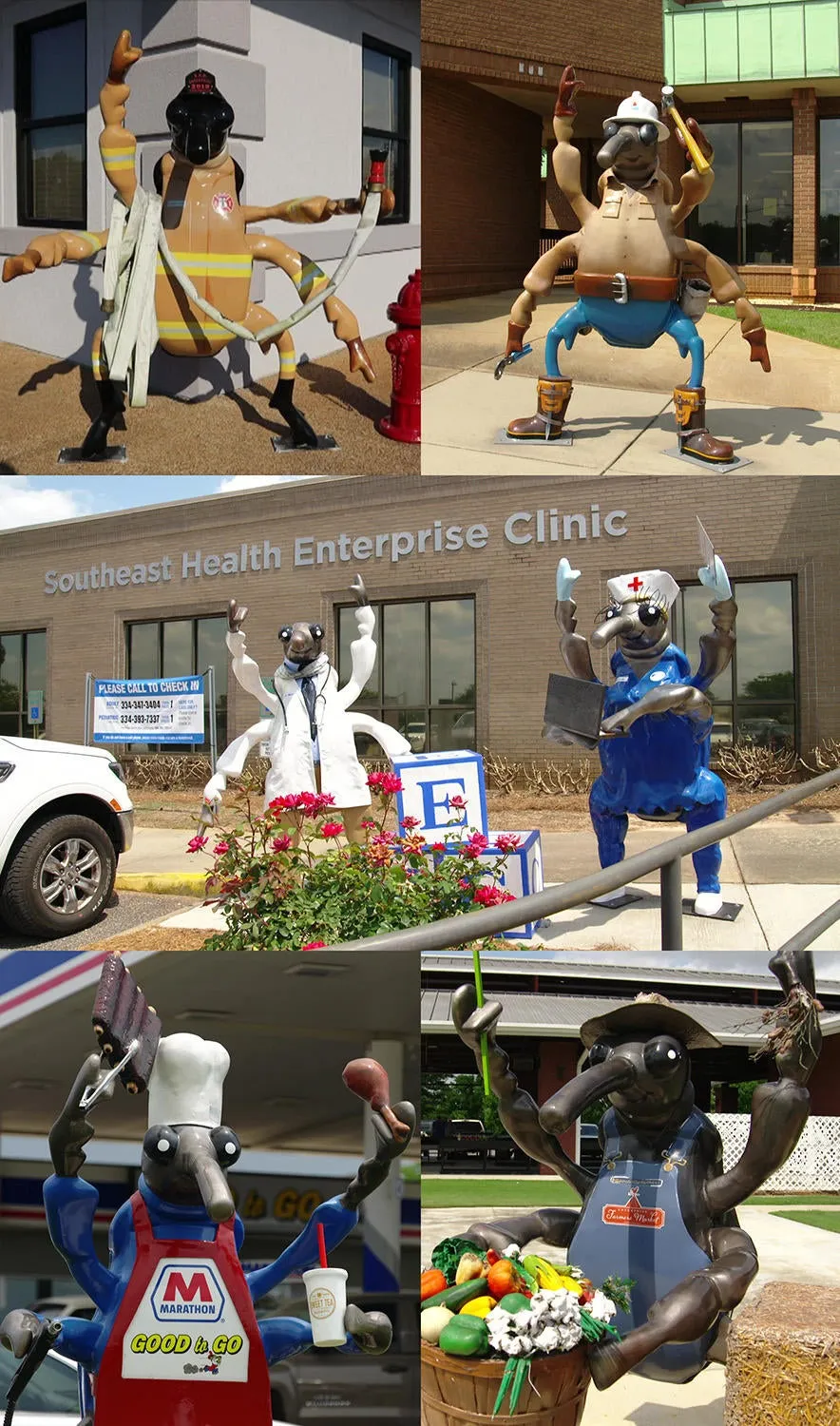 Photo: Enterprise, Alabama, via assets1.cbsnewsstatic.com
For Enterprise, this was economic catastrophe. The town of 2,000 people depended entirely on cotton—their farms, businesses, banks, and livelihoods all revolved around the white gold that had sustained the region for generations.
Within two years, the boll weevil had destroyed 60% of the county's cotton crop. Farms went bankrupt. Families fled. Main Street businesses boarded their windows. Enterprise was dying, killed by an insect smaller than a dime.
But then something extraordinary happened that transformed disaster into the town's greatest blessing.
The Farmer Who Refused to Quit
While his neighbors abandoned their ruined cotton fields, local farmer H.M. Sessions made a radical decision. Instead of planting more cotton for the weevils to destroy, he switched to peanuts—a crop the beetles couldn't touch.
Sessions had no idea he was conducting one of the most successful agricultural experiments in Southern history. Peanuts thrived in Alabama's sandy soil and climate. Better yet, they actually improved the soil by adding nitrogen, making the land more fertile than it had been under decades of cotton cultivation.
Sessions' first peanut harvest was so successful that neighboring farmers began copying his strategy. Within three years, Coffee County had transformed from a cotton monoculture to a diversified agricultural region with peanuts as the primary crop.
The Prosperity That Nobody Saw Coming
The economic transformation was stunning. Peanuts generated more profit per acre than cotton ever had, required less labor, and created new industries that cotton couldn't support. Peanut processing plants opened. Confectionery companies arrived. The town that had been dying suddenly found itself busier and wealthier than before the boll weevil invasion.
By 1919, Enterprise's economy had not only recovered—it had exploded. Per capita income had increased 40% over pre-weevil levels. The population was growing again. New businesses were opening monthly.
Local businessman Bon Fleming looked around at the unprecedented prosperity and reached a conclusion that sounded insane but was undeniably true: the boll weevil had saved Enterprise by forcing the town to abandon an economic model that was actually holding them back.
The Monument to Destruction
Fleming proposed something no community in American history had ever attempted: building a monument to honor the pest that had devastated their economy.
The idea sparked fierce debate. Critics called it ridiculous, arguing that no town should celebrate its own destruction. Supporters countered that the boll weevil had been Enterprise's unwitting savior, forcing beneficial changes that never would have happened voluntarily.
Fleming won the argument by pointing to the undeniable evidence: Enterprise was richer, more stable, and better positioned for the future because the boll weevil had destroyed their cotton dependency.
On December 11, 1919, Enterprise unveiled the world's first and only monument dedicated to an agricultural pest. The statue featured a robed woman holding a fountain above her head—with a large bronze boll weevil perched on top.
The Inscription That Told the Truth
The monument's inscription read: "In profound appreciation of the boll weevil and what it has done as the herald of prosperity, this monument was erected by the citizens of Enterprise, Coffee County, Alabama."
The wording was deliberately provocative. Enterprise wasn't just acknowledging the weevil's role—they were expressing "profound appreciation" for an insect that had initially seemed like their destroyer.
The statue became an immediate sensation. Newspapers across the country covered the story of the town that thanked its tormentor. Tourists began arriving to see the bizarre monument for themselves.
The Economic Lesson That Changed Everything
Enterprise's boll weevil monument became a case study in economic resilience taught at business schools and agricultural colleges. The town had accidentally discovered what economists now call "beneficial disruption"—when external shocks force positive changes that wouldn't occur naturally.
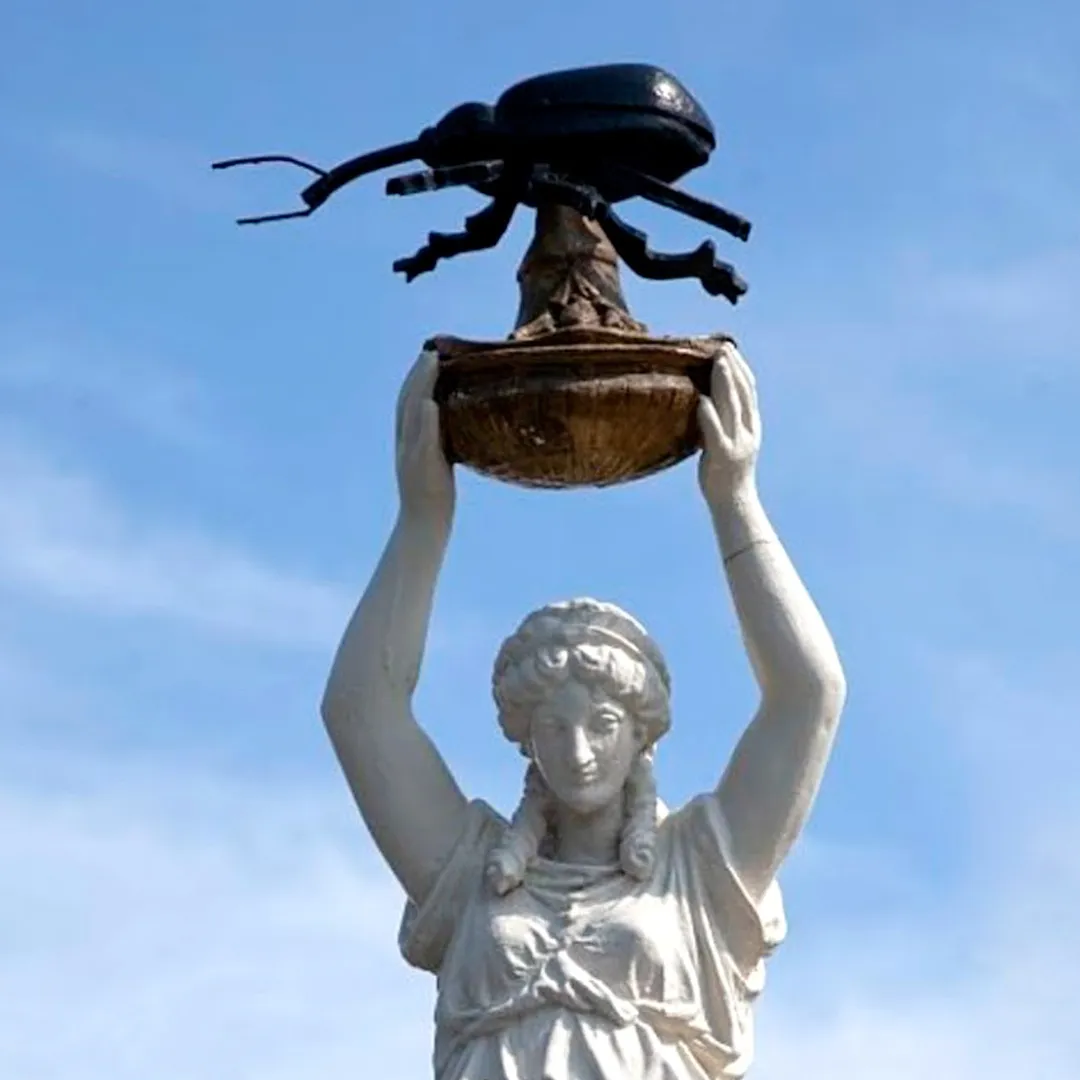 Photo: boll weevil monument, via ghosty-production.s3.amazonaws.com
The cotton monoculture that had sustained Enterprise for decades was actually a vulnerability disguised as strength. Dependence on a single crop left the entire community exposed to market fluctuations, weather disasters, and pest infestations. The boll weevil revealed this weakness by exploiting it catastrophically.
Peanut diversification created multiple revenue streams, reduced risk, and opened markets that cotton couldn't access. Enterprise became more prosperous precisely because they were forced to become more adaptable.
The Monument That Still Stands
Today, the boll weevil monument remains in downtown Enterprise's town square, still drawing curious visitors who can't quite believe a community would honor its destroyer. The original statue has been renovated several times, but the message remains unchanged.
Enterprise never forgot the lesson the boll weevil taught them. When other economic challenges arose—the Great Depression, agricultural mechanization, global competition—the town applied the same principle: adapt quickly, diversify broadly, and sometimes embrace disruption as opportunity.
The boll weevil is long gone from Alabama, controlled by modern pesticides and agricultural practices. But Enterprise's monument endures as a reminder that sometimes the worst thing that can happen to you turns out to be exactly what you needed.
In a world that typically builds monuments to heroes and victories, Enterprise chose to honor the enemy that made them stronger. It's possibly the most honest monument in America.