Illegal Aliens: The New Mexico Town That Banned UFO Landings and Accidentally Became a Tourist Empire
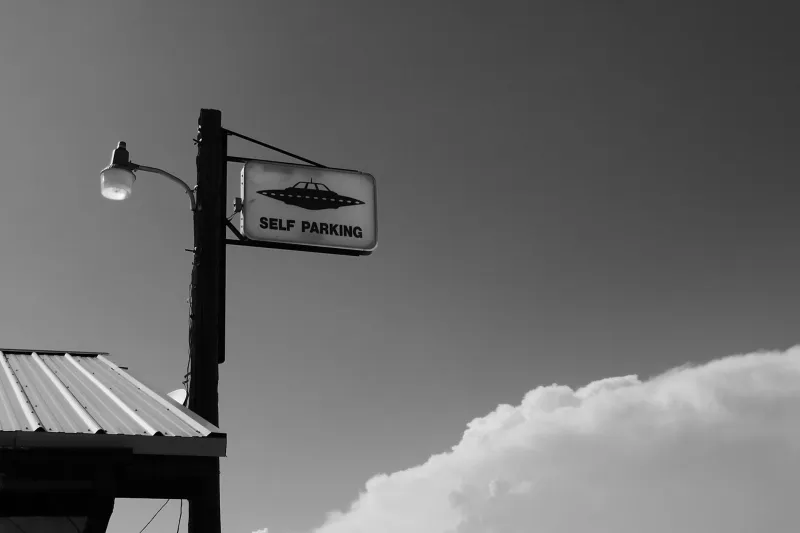
The Ordinance That Changed Everything
In the spring of 1994, Roswell Heights, New Mexico, was dying a slow economic death. The small desert community of 2,800 residents had watched its main industries—copper mining and cattle ranching—collapse over the previous decade. Main Street looked like a movie set for a ghost town, with more "For Lease" signs than functioning businesses.
That's when Mayor Patricia "Pat" Gonzalez had what she later called "either the dumbest or smartest idea of my political career."
Sitting in a nearly empty town council meeting on April 15, 1994, Gonzalez proposed Ordinance 94-7: a local law that would require any "extraterrestrial beings, spacecraft, or interdimensional entities" to obtain proper permits before landing within city limits. Unauthorized alien landings would be punishable by a $300 fine and up to 30 days in the city jail.
The five council members present—representing a quorum only because two others had moved away—passed the ordinance unanimously, mostly because they thought it was funny.
They had no idea they'd just written their town's economic salvation.
The Legal Framework for Intergalactic Immigration
Ordnance 94-7 wasn't just a throwaway joke. Gonzalez, a former paralegal, had crafted the legislation with surprising legal precision. The ordinance defined "unauthorized landing" as any extraterrestrial contact that occurred without filing proper paperwork with the city clerk's office at least 72 hours in advance.
The law specified that alien visitors would need to provide "proof of peaceful intent," submit to a basic health screening ("to prevent the introduction of off-world pathogens"), and pay a $50 landing permit fee. Repeat offenders could face enhanced penalties, including "banishment from city airspace for a period not to exceed one Earth year."
"We figured if aliens were smart enough to travel between stars, they were smart enough to follow local parking ordinances," Gonzalez later explained to bemused reporters.
The ordinance also established the position of "Extraterrestrial Liaison Officer," a volunteer position that would serve as the official point of contact between the city government and any visiting aliens. The job came with a official badge and a city-issued flashlight.
From Joke to Jackpot
Gonzalez had hoped the silly ordinance might generate a brief mention in the Albuquerque newspaper, perhaps drawing a few curious tourists to their struggling community. Instead, the story went viral in an era before social media, picked up by wire services and eventually featured on late-night television shows.
Within six months, Roswell Heights was receiving thousands of visitors annually, all wanting to see the town that had "legally prepared for alien contact." Entrepreneurs quickly recognized the opportunity, opening UFO-themed restaurants, alien souvenir shops, and even a "Cosmic Courthouse" gift store directly across from city hall.
"We went from having one functioning restaurant to having twelve UFO-themed eateries in two years," recalls former city clerk Maria Santos, who became the town's first official Extraterrestrial Liaison Officer. "Suddenly, everyone wanted to eat at the place that might need to process alien landing permits."
The Economics of Extraterrestrial Tourism
By 1997, UFO tourism had become Roswell Heights' primary industry. The annual "Alien Landing Permit Festival" drew over 50,000 visitors, generating an estimated $8.2 million in direct economic impact for a town that had been hemorrhaging residents just three years earlier.
Local businesses embraced the theme with enthusiasm that bordered on obsession. The Cosmic Cafe served "Little Green Burgers" and "Martian Margaritas." The Desert Inn became the "Galaxy Motel," complete with spaceship-shaped room keys and alien-themed amenities. Even the local bank installed a UFO-shaped ATM that played eerie space sounds during transactions.
The town's transformation wasn't limited to kitsch. Serious UFO researchers and enthusiasts began relocating to Roswell Heights, drawn by the community's official embrace of extraterrestrial possibilities. The town became home to three UFO research organizations, a legitimate astronomical observatory, and the Southwest Institute for Unexplained Phenomena.
Legal Challenges from the Stars
Ordnance 94-7 faced its first serious test in 1999 when a group calling itself the "Interplanetary Civil Liberties Union" filed a federal lawsuit challenging the ordinance as unconstitutional. The plaintiffs—whose identities remained mysteriously sealed—argued that the law violated interstate commerce regulations and discriminated against "non-terrestrial entities."
The case, officially titled "Doe et al. v. City of Roswell Heights," made headlines nationwide before being dismissed on standing grounds. Federal Judge Rebecca Martinez ruled that the plaintiffs had failed to demonstrate any actual harm from the ordinance, noting that "no documented alien landings have occurred within city limits since the law's passage."
The lawsuit itself became a tourist attraction, with visitors flocking to the courthouse to see where "aliens had sued for civil rights."
The Permit That Never Came
Despite processing thousands of joke applications over the years, Roswell Heights has never issued an actual alien landing permit. The closest they came was in 2003, when someone submitted a meticulously completed application claiming to represent "the Zeta Reticuli Trade Delegation."
The application included detailed spacecraft specifications, a proposed landing site (the high school football field), and a $50 money order for the permit fee. City officials spent weeks debating whether to approve it before ultimately rejecting the application due to "insufficient documentation of peaceful intent."
"We took it seriously because, honestly, we didn't know what else to do," admits former mayor Gonzalez. "The application was more thorough than most building permit requests we received."
The Unexpected Legitimacy of a Joke Law
Thirty years after its passage, Ordinance 94-7 remains on the books and continues to generate tourism revenue for Roswell Heights. The town now has a population of over 8,000, most of whom work in UFO-related tourism or the aerospace research facilities that have relocated to the area.
The ordinance has also inspired copycat legislation in other struggling communities. At least fifteen towns across the American Southwest have passed similar "alien landing" laws, though none have achieved Roswell Heights' level of success.
"We proved that sometimes the most ridiculous ideas can have the most serious consequences," reflects current mayor David Chen, who won election in 2018 on a platform of "Responsible Extraterrestrial Policy." "A joke law saved our town."
The Legacy of Legislative Humor
Roswell Heights' transformation from dying mining town to UFO tourism capital demonstrates the unpredictable power of creative municipal governance. What began as a desperate publicity stunt became a sustainable economic model that has supported the community for three decades.
The town's success has attracted academic attention from urban planners and economists studying how small communities can reinvent themselves through "destination branding." Roswell Heights regularly hosts conferences on rural economic development, with city officials sharing their "alien landing permit model" with other struggling towns.
Ordnance 94-7 also serves as a reminder that local laws, no matter how absurd, can have lasting real-world consequences. The ordinance that was written as a joke has generated millions in tax revenue, created hundreds of jobs, and transformed a community's entire identity.
Today, visitors to Roswell Heights can still apply for alien landing permits at city hall, where a sign reads: "Extraterrestrial Landing Permits Available—Please Allow 72 Hours for Processing." Below it, in smaller print: "No Actual Aliens Have Applied to Date."
But in a town where the impossible became profitable, even that disclaimer seems like it might be subject to change.