The 38-Minute War Where One Army Forgot to Show Up for Battle
When Diplomacy Has a 40-Minute Deadline
At 9:02 AM on August 27, 1896, the British Royal Navy opened fire on the Sultan's palace in Zanzibar. By 9:40 AM, the war was over, the palace was in ruins, and history had witnessed the most lopsided military conflict ever recorded.
The entire Anglo-Zanzibar War lasted exactly 38 minutes — barely long enough to soft-boil an egg, and significantly shorter than most people's morning commutes. When the smoke cleared, one side had suffered nearly 500 casualties while the other had sustained exactly one injury: a British sailor who was slightly wounded.
It wasn't so much a war as it was a very loud, very brief misunderstanding with cannons.
The Succession Crisis That Nobody Asked For
The absurd conflict began three days earlier when Sultan Hamad bin Thuwaini of Zanzibar died unexpectedly. According to a treaty signed in 1886, any new sultan required British approval before taking power — a colonial arrangement that the Zanzibaris had grown increasingly tired of tolerating.
 Photo: Sultan Hamad bin Thuwaini of Zanzibar, via assets.lastdodo.com
Instead of waiting for British blessing, Hamad's cousin Khalid bin Barghash immediately declared himself the new sultan and barricaded himself inside the palace with about 2,800 supporters, several artillery pieces, and one aging yacht optimistically called a warship.
The British were not amused.
Consul-General Basil Cave delivered an ultimatum: Khalid had until 9:00 AM on August 27 to vacate the palace and withdraw his claim to the throne. If he refused, the Royal Navy would make the decision for him.
Khalid apparently thought the British were bluffing.
The World's Most One-Sided Naval Battle
As the deadline approached, five British warships positioned themselves in Zanzibar Harbor, their guns trained on the Sultan's palace. The HMS St. George, HMS Philomel, and HMS Thrush were joined by two gunboats, creating a floating artillery battery that could level half the city.
Facing this naval armada was Khalid's "fleet": one wooden yacht named HHS Glasgow that had been converted into a warship by bolting a few small cannons to its deck. It was roughly equivalent to bringing a pocket knife to a tank fight.
At exactly 9:02 AM, when Khalid failed to respond to the final ultimatum, the British opened fire.
38 Minutes of Overwhelming Force
What followed was less a battle than a demonstration of industrial-era firepower. The British ships unleashed over 500 shells and 4,100 machine gun rounds in the span of 38 minutes, systematically destroying everything in sight.
Khalid's palace was reduced to rubble within the first ten minutes. His "warship" sank almost immediately after taking a direct hit from a 4-inch naval gun. The few artillery pieces his supporters managed to fire were silenced before they could reload.
Meanwhile, Khalid himself had apparently fled the palace during the opening barrage, leaving his supporters to face the British bombardment alone. He later claimed he had been conducting "strategic negotiations" from a safer location.
The Lunch That Outlasted a War
By 9:40 AM, white flags were flying over what remained of the palace complex. The new sultan's supporters had suffered an estimated 500 casualties, while the British had sustained one minor injury when a sailor was grazed by debris.
Legend has it that when British marines entered the ruined palace, they found the Sultan's abandoned lunch still warm on the table — a meal that had outlasted an entire war.
Khalid, meanwhile, had sought asylum at the German consulate, where he would remain for several days before being smuggled out of Zanzibar disguised as a German merchant.
The Diplomatic Cleanup
Within hours of the bombardment ending, the British had installed their preferred candidate, Hamoud bin Mohammed, as the new Sultan. Hamoud's first official act was to agree to pay for the cost of the shells that had destroyed his predecessor's palace — adding financial insult to military injury.
The war was so brief that most residents of Zanzibar didn't realize it had happened until they saw the smoke rising from the palace district. International newspapers struggled to report on a conflict that had begun and ended between their morning and afternoon editions.
The Record That Nobody Wants
The Anglo-Zanzibar War officially holds the Guinness World Record as the shortest war in recorded history. It's a distinction that highlights the absurdity of colonial power dynamics and the devastating efficiency of modern weaponry when deployed against traditional forces.
The conflict also demonstrated how quickly political situations could spiral out of control in the age of imperialism. What began as a succession dispute escalated to naval bombardment in less than 72 hours, with no meaningful attempt at diplomatic resolution.
Echoes of a 38-Minute Empire
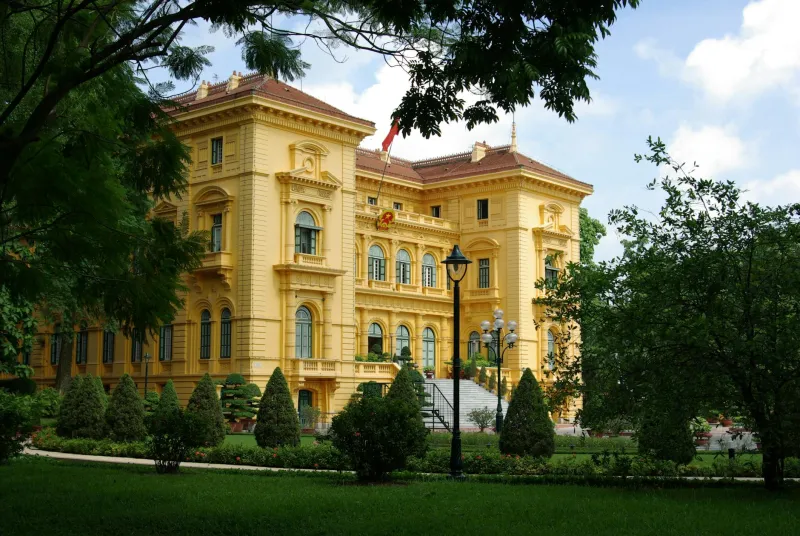
Today, the site of the Sultan's palace houses the House of Wonders museum, and few visitors realize they're standing on the battlefield of history's shortest war. Zanzibar eventually gained independence from Britain in 1963, making the 38-minute conflict a footnote in a much longer story of colonial resistance and eventual liberation.
 Photo: House of Wonders, via thumbs.dreamstime.com
The Anglo-Zanzibar War serves as a reminder that sometimes the most significant historical events are also the most ridiculous. In an era when wars could drag on for years or even decades, one conflict managed to resolve itself in less time than it takes to watch a sitcom — though with considerably less entertainment value for the people involved.
Khalid bin Barghash, incidentally, never did get to finish that lunch.