The Train That Missed the Battle — and Changed the Civil War

Photo: Cunning Linguist from USA, CC BY 2.0, via Wikimedia Commons
War is chaos dressed up in strategy. Generals write orders, couriers carry them, and somewhere between the writing and the carrying, things go wrong in ways that no tactical manual has ever fully accounted for. The Civil War, fought across a continent with telegraph lines that went dead at the worst moments and railroad schedules that were more suggestion than law, was particularly vulnerable to this kind of institutional unraveling.
Which is why, in the summer of 1862, an entire Confederate regiment climbed aboard a train, rode for several hours, stepped onto a platform in the wrong town, and — through no fault of their own — changed the outcome of a battle they never actually fought.
The Iron Horse Was Supposed to Be the Advantage
By the Civil War's second year, both sides had come to understand that railroads were not merely a convenience — they were a strategic weapon. The ability to move thousands of troops across hundreds of miles in days rather than weeks fundamentally changed what was militarily possible. The Confederacy, despite operating with fewer rail miles and less industrial capacity than the Union, worked hard to leverage its rail network for rapid troop deployment.
The problem was that 19th-century railroad logistics were, by modern standards, astonishingly fragile. Schedules were handwritten. Dispatch orders passed through multiple hands. Station agents, regimental clerks, and field commanders all operated with incomplete information, and the margin for error was essentially the same as the margin for disaster.
Communication happened at the speed of a horse or a telegraph wire, whichever was available — and telegraph wires had a habit of being cut by the enemy at inconvenient moments.
One Wrong Order, One Wrong Platform
The specific regiment at the center of this story — a Confederate infantry unit operating in the Western Theater — had been ordered to reinforce a larger Confederate force engaged in a contested engagement. The order was issued by a field commander, transcribed by a regimental clerk, and passed to a railroad dispatch officer who was managing multiple troop movements simultaneously.
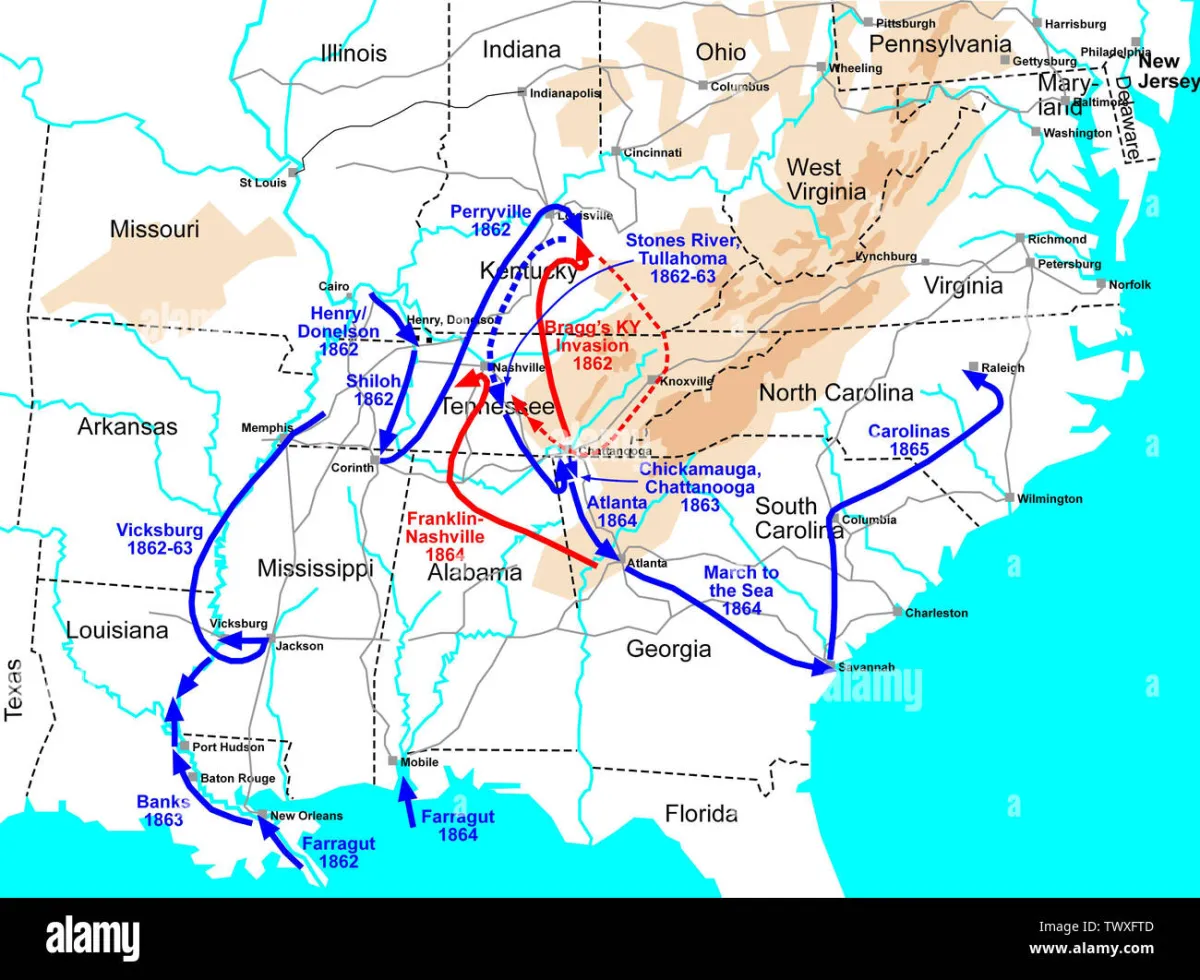 Photo: Western Theater, via c8.alamy.com
Somewhere in that chain, a station name was either misread, miscopied, or misheard. Two stations in the region had similar names — a common problem in an era before standardized naming conventions — and the dispatch officer routed the regiment's train to the wrong one.
The regiment traveled for hours, arrived at a station that showed no signs of active military operations, and spent the better part of a day attempting to figure out where they were supposed to be. By the time the error was identified and corrected orders were issued, the battle they had been sent to reinforce was effectively over.
The Battle That Turned Without Them
The engagement they missed was one of those mid-war clashes that didn't make the history books the way Gettysburg or Antietam did — but mattered enormously to the campaign it was embedded in. The Confederate force already engaged had been counting on the regiment's arrival to press an advantage on a specific flank. When the reinforcements didn't appear, the Confederate commander was forced to pull back rather than commit to a push that might have extended his line dangerously thin.
The Union force, which had been bracing for a reinforced assault, found itself instead holding ground that it had expected to lose. The result was a Union defensive success — not a dramatic victory, but a stabilizing one — that helped preserve a supply corridor the Union needed for subsequent operations in the region.
The Confederate commander, writing his after-action report, attributed the withdrawal to a deliberate tactical reassessment. He did not mention the missing regiment, either because he didn't know the full story yet or because acknowledging it would have been professionally uncomfortable. His report made the decision sound considered and strategic.
For decades, that framing stuck.
Historians and the Myth of the Masterplan
Military historians have a well-documented tendency — understandable, but persistent — to find strategic logic in outcomes that were actually accidental. When a battle turns on what appears to be a commander's decision, the assumption is usually that the decision was intentional. The alternative explanation, that nobody decided anything and events just sort of happened, is less satisfying and harder to footnote.
In the case of this engagement, the Confederate withdrawal was analyzed for generations as evidence of a commander who understood the limits of his position and chose discretion over exposure. Academic papers were written. The decision was cited in officer training curricula as an example of sound tactical judgment under pressure.
The railroad scheduling error that actually drove the outcome sat in regimental logs and dispatch records that nobody thought to cross-reference until the late 20th century, when a historian working on a broader study of Civil War logistics pulled the original movement orders and noticed the discrepancy between what had been commanded and where the regiment had actually gone.
The paper that followed was not widely read outside of Civil War scholarship circles. But within those circles, it landed like a small bomb.
What the Blunder Tells Us About War
There's a tempting lesson here about the randomness of history — the idea that great events turn on tiny accidents, that the arc of conflict bends toward whoever makes fewer clerical errors on a given Tuesday. That's partially true, but it's also a little too neat.
What the story really illustrates is how thoroughly human institutions shape historical outcomes, and how reluctant we are to admit it. Armies are bureaucracies. Wars are, among other things, administrative contests. The side that can successfully move paper from one desk to another — orders, schedules, supply manifests — has an advantage that no amount of battlefield heroism can fully compensate for.
A regiment missed a battle because someone wrote down the wrong station name. The battle's outcome shifted. A campaign's trajectory bent. And for a century and a half, the official explanation was that a general had made a smart call.
He hadn't. A clerk had made a bad one.
Sometimes those two things look identical from far enough away.