The Failed Chemist Who Stumbled Into America's $1 Billion Sticky Note Empire
The Laboratory Disaster That Changed Everything
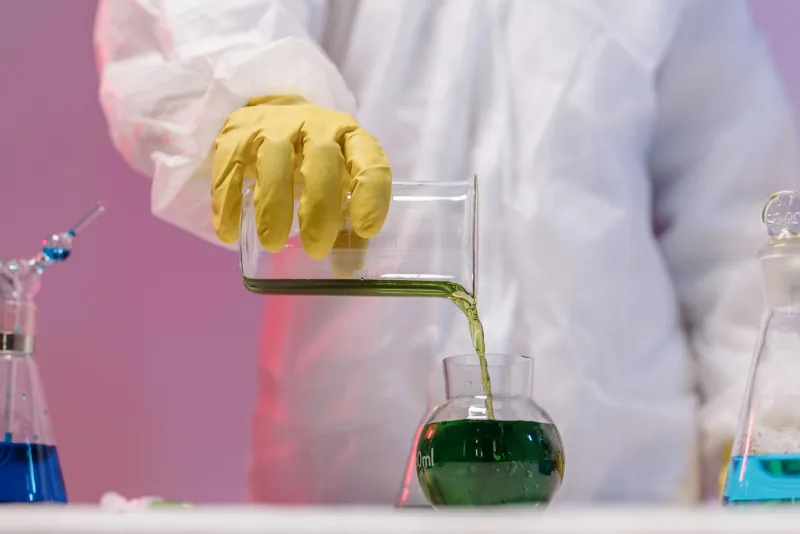
Spencer Silver stared at his latest creation with the kind of disappointment only a scientist can feel. After months of painstaking work in 3M's laboratories, he had set out to engineer the strongest adhesive in company history. What he got instead was the weakest glue imaginable — a substance so pathetically sticky that it could barely hold two pieces of paper together.
It was 1968, and Silver had just committed what he considered career suicide. In the ultra-competitive world of industrial chemistry, creating an adhesive that didn't adhere was like designing a car that couldn't drive. He tucked his formula away and tried to forget about it.
What Silver didn't realize was that he had just invented one of the most profitable products in American business history.
When Weakness Became Strength
For five years, Silver's failed adhesive gathered dust while he worked on other projects. But something about that weak glue nagged at him. Unlike traditional adhesives that formed permanent bonds, his creation could stick and unstick repeatedly without losing its properties. It was reusable, repositionable, and left no residue.
The problem wasn't the invention — it was finding someone who wanted a glue that barely worked.
Silver began what he later called his "missionary work," wandering the halls of 3M trying to convince colleagues that his weak adhesive was actually revolutionary. Most thought he'd lost his mind. Who needed glue that came unstuck?
The Choir Practice That Sparked a Revolution
Art Fry had a problem. Every Sunday at his Presbyterian church in St. Paul, Minnesota, he would carefully mark pages in his hymnal with small pieces of paper. And every Sunday, those bookmarks would fall out at the worst possible moments, leaving him frantically flipping through pages while the congregation waited.
 Photo: St. Paul, Minnesota, via c8.alamy.com
 Photo: Art Fry, via www.thevintagenews.com
Fry worked at 3M, where he had attended one of Silver's presentations about his disappointing adhesive. Most employees had politely ignored the weak glue demonstration, but something clicked for Fry during that frustrating choir practice in 1974.
What if you could make bookmarks that stuck but didn't stick permanently?
The Accidental Empire
Fry rushed to the lab the next Monday and began experimenting with Silver's formula. He coated strips of paper with the weak adhesive, creating the world's first Post-it Note prototypes. They worked perfectly — sticking firmly enough to stay in place but peeling away cleanly when needed.
But even then, 3M executives weren't convinced. The company had invested decades building a reputation for permanent adhesives. Why would anyone want temporary stickiness?
The breakthrough came when Fry started using his invention for office memos. Instead of paper clips or staples, he would attach notes to documents with his repositionable bookmarks. Colleagues began asking for their own supplies of the mysterious yellow squares.
The Launch That Almost Never Happened
In 1977, 3M test-marketed the product in four American cities. It bombed spectacularly. Consumers couldn't understand why they needed weak glue when strong glue already existed. The company nearly cancelled the entire project.
Then someone had a brilliant idea: give the product away for free.
3M launched massive sampling campaigns, flooding offices across America with complimentary Post-it Notes. The results were immediate and dramatic. Once people actually used the product, they couldn't live without it. Reorder rates hit 95% — virtually unheard of for office supplies.
From Failure to Fortune
By 1980, Post-it Notes had become a national phenomenon. The product that began as Spencer Silver's most embarrassing failure generated over $100 million in revenue within its first full year of national sales. Today, Americans purchase more than 50 billion Post-it Notes annually.
The irony wasn't lost on Silver, who spent the remainder of his career watching his greatest mistake become 3M's most recognizable product. His weak adhesive had succeeded precisely because it failed to do what adhesives were supposed to do.
The Billion-Dollar Accident
The Post-it Note empire now generates more than $1 billion annually for 3M, making it one of the most profitable accidents in corporate history. The product has spawned countless variations — from digital Post-it apps to architectural Post-it murals that transform entire buildings into works of art.
Spencer Silver's laboratory disaster had become America's favorite office supply, proving that sometimes the most revolutionary inventions are the ones that work by not working at all.
The next time you stick a yellow square to your computer monitor, remember: you're using a product that exists only because a brilliant chemist spent years trying to hide his biggest professional embarrassment.