The River That Rose From Its Own Grave After a Century of Being Dead
The Day a River Died
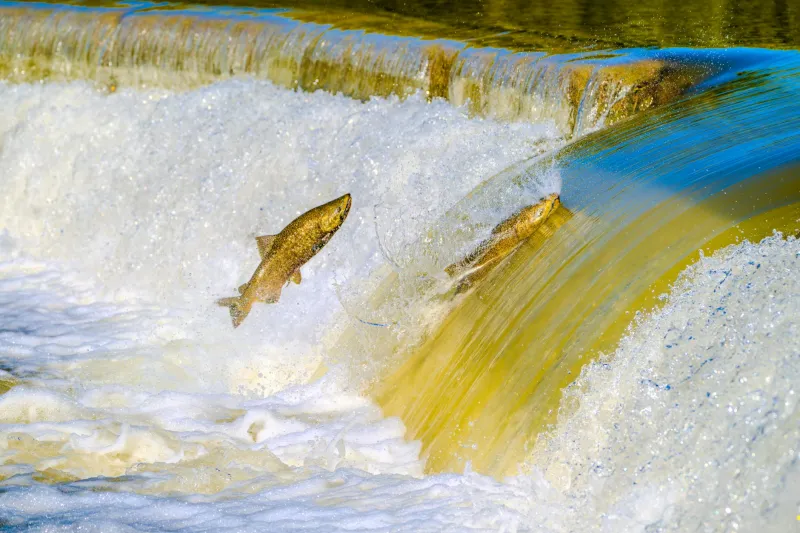
For thousands of years, the Elwha River had been the lifeblood of Washington's Olympic Peninsula. Chinook salmon the size of small children swam upstream each fall, their silver bodies flashing through crystal-clear waters that the Lower Elwha Klallam Tribe considered sacred.
 Photo: Olympic Peninsula, via i.pinimg.com
 Photo: Elwha River, via c8.alamy.com
Then, in 1913, everything changed.
Two massive concrete dams rose from the riverbed like tombstones, blocking the ancient salmon runs and transforming a living ecosystem into a series of stagnant pools. The Elwha Dams promised hydroelectric power for the growing lumber industry, but they delivered something else entirely: the death of a river.
Tribal elders watched their ancestral waters disappear behind walls of concrete and did something unprecedented — they held funeral ceremonies for the Elwha River itself.
When a Waterway Becomes a Ghost
The transformation was swift and brutal. Within a decade, salmon populations that had sustained the region for millennia simply vanished. The river that once ran gin-clear turned murky brown as sediment built up behind the dams. Native communities that had lived along the Elwha for over 3,000 years found themselves mourning not just fish, but an entire way of life.
"We grieved for the river like we would grieve for a family member," recalled tribal elder Adeline Smith decades later. "Because that's what it was to us."
By the 1990s, the Elwha had become a case study in environmental destruction. Scientists estimated that the dams had trapped 18 million cubic yards of sediment — enough to bury a football field under a pile 1,000 feet high. The river existed in name only; everything that made it alive had been suffocated behind concrete.
The Resurrection Project
In 2011, something extraordinary happened. After decades of legal battles and environmental advocacy, the federal government announced the largest dam removal project in American history. Both Elwha Dams would be demolished, and the river would be allowed to flow free for the first time in nearly a century.
Even the most optimistic scientists predicted that river recovery would take decades. Ecosystems don't just bounce back from a century of damage — they crawl back slowly, species by species, over generations.
The Elwha River had other plans.
The Speed of Miracles
What happened next defied every scientific prediction and challenged basic assumptions about ecological recovery. As soon as the first dam began coming down in September 2011, the river seemed to remember exactly what it was supposed to be.
Within weeks, crystal-clear water was flowing through sections that had been stagnant for 98 years. Within months, salmon began appearing in stretches of river they hadn't seen since the Taft administration. By 2014, when the second dam was fully removed, Chinook salmon were spawning in areas their great-great-grandparents had never seen.
"It was like watching a resurrection," said marine biologist Sarah Morley, who documented the river's recovery. "We expected gradual change over decades. Instead, we got an ecological explosion almost overnight."
Nature's Memory Bank
The speed of the Elwha's resurrection revealed something scientists are still trying to understand: rivers have memories encoded in their very structure. As soon as the concrete barriers were removed, the water began carving its original channel, following patterns that had been buried for a century.
Salmon populations that should have taken decades to reestablish were thriving within years. Steelhead trout appeared in record numbers. Even species that hadn't been documented in the Elwha for generations began showing up as if they had been waiting just downstream for the concrete to disappear.
The river seemed to be healing itself faster than human science could measure the recovery.
The Funeral Becomes a Celebration
For the Lower Elwha Klallam Tribe, watching their river return from the dead felt like witnessing a miracle. Tribal members who had attended funeral ceremonies for the river in their youth now brought their grandchildren to witness salmon runs that their own grandparents had only heard about in stories.
"We held ceremonies to mourn the river," said tribal chairman Frances Charles. "Now we hold ceremonies to welcome it home."
The psychological impact was as profound as the ecological one. A community that had spent generations grieving the loss of their ancestral waters suddenly found themselves custodians of a reborn ecosystem.
Lessons From a Liquid Phoenix
The Elwha River's resurrection has become a template for dam removal projects across America. But it also raises deeper questions about the resilience of natural systems and the speed at which environmental damage can be reversed when we simply get out of nature's way.
Today, the Elwha flows free from its headwaters in Olympic National Park to the Strait of Juan de Fuca, carrying sediment and salmon just as it did before the dams were built. The river that died in 1913 and was mourned for a century has proven that sometimes, the most powerful force in nature is simply the opportunity to remember what it used to be.
 Photo: Olympic National Park, via i.pinimg.com
Standing beside the Elwha today, it's almost impossible to believe that massive concrete dams once turned this vibrant ecosystem into a series of lifeless pools. The river has erased nearly every trace of its century-long death, flowing toward the sea as if the dams had never existed at all.