Fifty Thousand Ballots, One Typo, and the Woman Who Accidentally Ran the City
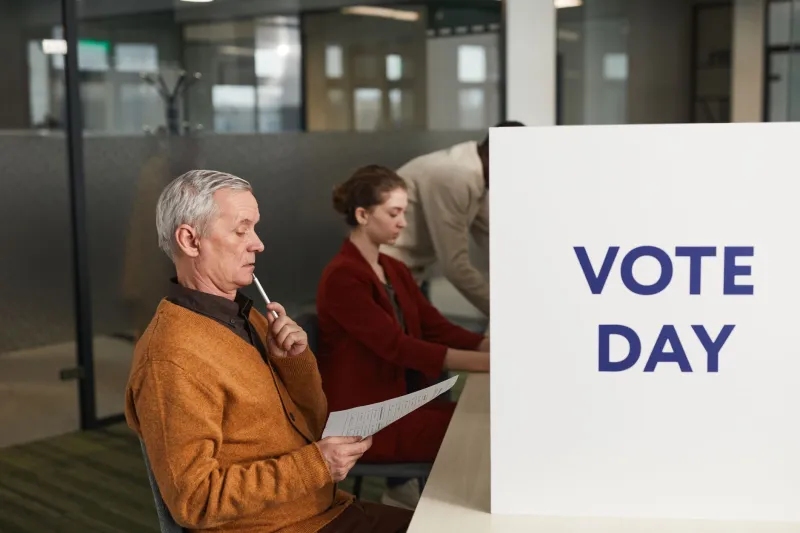
There's a version of American history where women didn't hold elected office until the 20th century handed them the right to vote. Then there's the version that actually happened — which includes at least one case where a woman became the functional head of a city government not through suffrage, not through campaigning, and not through any plan at all. Just a printing press, a tired typesetter, and fifty thousand ballots that said the wrong thing.
Believe it. Or realm.
The Morning the Ballots Came Back Wrong
It was the fall of 1910 in Sandusky, Ohio, and the city was gearing up for a routine municipal election. Incumbent councilmen, a city auditor race, a few local measures — nothing that would make the national wire. The county print shop had been contracted to produce ballots for weeks, and by all accounts the job was moving along without drama.
Then someone noticed.
A poll worker reviewing sample ballots the morning before the election spotted something that made her read the page twice. On the line for City Auditor, the name printed wasn't the male incumbent, James H. Burwell. It was a name that had been entered in the system for a completely different race — a school board contest — and through what investigators later described as a compositor's transposition error, the name of Clara B. Ames had migrated onto the auditor ballot. Worse, her name appeared twice on some print runs, occupying both the incumbent's slot and a challenger's slot, effectively crowding out every other candidate on the line.
The ballots had already been distributed to seventeen precincts.
Fifty Thousand Pieces of Paper That Couldn't Be Recalled
Election officials in 1910 didn't have the luxury of a digital fix. There was no reprint window. The ballots were in the hands of precinct captains across the county, and pulling them back would have required postponing the election entirely — something Ohio election law at the time made nearly impossible without a court order issued at least five days in advance.
The county board met in emergency session and reached a conclusion that was less a legal ruling and more a collective shrug: the election would proceed. Voters would be advised at polling locations that the auditor's race contained a printing error, and that votes cast for Clara B. Ames were being logged as "provisional" pending a post-election legal review.
What nobody anticipated was how many people would vote for her anyway.
Clara Ames was a schoolteacher and civic organizer who had lived in Sandusky for over two decades. She was well-liked. She was involved in the local temperance movement and the women's civic league. She had never expressed any interest in running for city auditor. She found out her name was on the ballot the same way most of the city did — by reading the morning paper.
When votes were tallied, Ames had received 4,200 votes. Burwell received 3,100. The provisional question hadn't mattered — she won outright.
The Legal Chaos That Followed
What came next was a legal knot that took nearly eight months to fully untangle.
Burwell's attorneys argued the election was void on its face — a candidate who hadn't filed, hadn't qualified, and hadn't been certified couldn't legally appear on the ballot, ergo any votes for her were null. The county board agreed in principle but couldn't agree on a remedy. Did that mean Burwell won by default? Did it trigger a special election? Did the second-place certified candidate advance?
Ames, for her part, did something nobody expected: she hired a lawyer and contested the challenge. She argued — and her attorney argued persuasively — that the error was the county's, not hers, and that disenfranchising thousands of voters because of an administrative mistake set a dangerous precedent. The voters had made their choice clearly. The ballot had her name. They voted for it.
The Ohio Supreme Court ultimately declined to seat her, ruling that the filing and certification requirements existed for structural reasons that couldn't be waived by accident. A special election was ordered. Burwell won it with a much smaller margin than he'd expected.
But Ames had been the story for eight months. Newspapers from Cleveland to Cincinnati had covered her case. She gave interviews. She spoke at civic meetings. She was, functionally, one of the most prominent political figures in northern Ohio — and she'd gotten there because a typesetter had a bad Tuesday.
The Ripple Effect Nobody Planned
The Sandusky ballot case, as it came to be called in election law circles, had a surprisingly long tail.
Within three years, Ohio, Indiana, and Michigan had all passed revised ballot production statutes requiring dual-source verification of candidate names before print runs were approved. The concept of a "ballot proof review" — where a certified copy of the official candidate list is checked against the typeset ballot by an independent reviewer — traces directly back to the chaos Sandusky experienced in 1910.
And Clara Ames? She ran for the school board in 1912. Legitimately, this time. She won.
The woman who became an accidental candidate, who fought a legal battle she hadn't started, and who lost an office she'd never sought ended up holding elected office anyway — just not the one the printing press had picked for her.
Sometimes the typo is just the beginning of the story.