When the Post Office Forgot to Stop: The Wyoming Mailman's 27-Year Journey to Nowhere
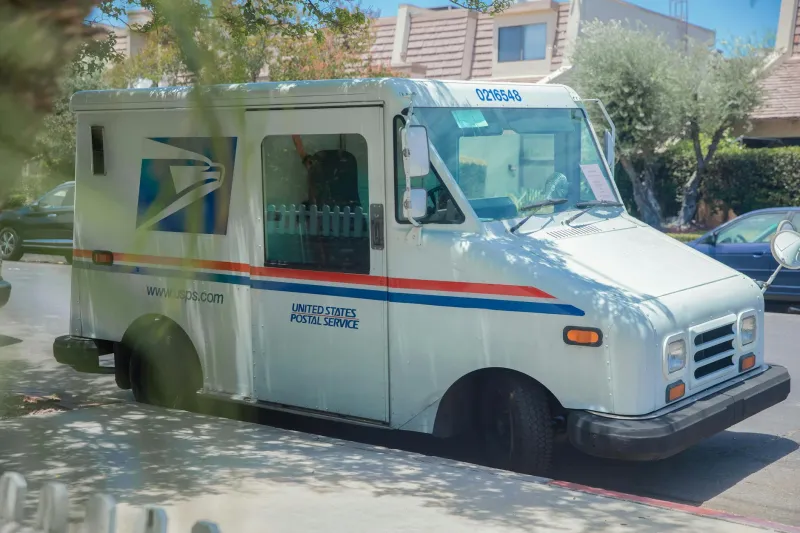
The Letter That Wouldn't Die
In the rolling hills of Carbon County, Wyoming, mailman Harold Brewster had a problem. Every few months, the same piece of mail would appear in his delivery bag—a simple white envelope addressed to "Robert J. Henley, 1247 Sagebrush Road, Riverside, WY 82322." The problem wasn't that Harold couldn't find the address. The problem was that 1247 Sagebrush Road had been demolished in 1978 to make way for a highway expansion project.
 Photo: Carbon County, Wyoming, via www.wyomingcarboncounty.com
But nobody told the computer system.
A Glitch in the Machine
What Harold discovered through nearly three decades of faithful service was that the U.S. Postal Service's automated routing system had developed what computer programmers would later call a "recursive loop." Every time Harold marked the letter as "undeliverable—address does not exist," the system would automatically regenerate a new delivery order within 90 to 120 days.
The original letter, postmarked December 15, 1979, was a Christmas card from Robert Henley's sister in Ohio. By the time the loop was finally broken in 2006, Harold had attempted to deliver that same Christmas card 127 times.
"I figured someone downtown knew what they were doing," Harold told the Rawlins Daily Times years later. "My job was to deliver mail, not question the system. So every few months, there it was again, and off I'd go to that empty lot where Sagebrush Road used to be."
The Student Who Solved the Mystery
The bizarre story might have continued indefinitely if not for Jennifer Martinez, a graduate student at the University of Wyoming studying rural mail delivery systems for her master's thesis in public administration. While researching postal efficiency in remote areas, she requested delivery logs from several Wyoming post offices and noticed something peculiar in the Carbon County records.
 Photo: University of Wyoming, via c8.alamy.com
"There was this one address that kept appearing over and over again," Martinez recalled. "Same letter, same route, same 'undeliverable' stamp, but it kept cycling back into the system like clockwork. I thought it had to be a data entry error."
But when Martinez dug deeper, she uncovered a paper trail that revealed the true scope of the postal system's most persistent glitch. The original Christmas card had been caught in what she termed "bureaucratic purgatory"—a perfect storm of outdated address databases, automated reprocessing protocols, and the simple fact that no human had ever questioned why the same piece of mail kept coming back.
The Cost of Persistence
By Martinez's calculations, the postal service had spent approximately $3,200 over 27 years attempting to deliver a single Christmas card. This included Harold's mileage, processing fees, storage costs, and the administrative overhead of generating 127 separate delivery attempts.
The card itself, meanwhile, had become something of a local legend. Harold's supervisor, Patricia Webb, admitted that newer postal workers were often told about "the ghost letter" as part of their orientation, though most assumed it was just a cautionary tale about following proper procedures.
"Harold became famous around here for his dedication," Webb explained. "He'd drive out to that empty lot, get out of his truck, walk around looking for house numbers that weren't there, then come back and file his report. Rain or shine, summer or winter. Twenty-seven years."
The Human Element
What makes Harold's story particularly remarkable isn't just the bureaucratic absurdity of the situation, but his unwavering commitment to his job despite the obvious futility of his task. Other mail carriers might have complained, cut corners, or simply ignored the recurring delivery order. Harold treated each attempt with the same professionalism as if the address might have magically reappeared since his last visit.
"People ask me if I felt foolish," Harold said. "But I've seen stranger things happen in thirty-five years of mail delivery. Houses get renumbered, roads get renamed, families move back to old addresses. I figured it was better to check than to assume."
The Resolution
Martinez's research ultimately led to a complete overhaul of the postal service's automated routing system in Carbon County. The Christmas card was finally marked as "permanently undeliverable" and retired to what Martinez jokingly called "postal hospice care."
Robert Henley, the intended recipient, had actually moved to Florida in 1977—two years before his sister even sent the card. He passed away in 1998, never knowing that somewhere in Wyoming, a dedicated mailman was still trying to wish him a Merry Christmas from 1979.
Harold retired in 2008, but not before receiving a commendation from the Postmaster General for "exceptional dedication to postal service delivery standards." The commendation made no mention of the 27-year wild goose chase, but Harold didn't mind.
"At least I knew that if anyone ever did build a house at 1247 Sagebrush Road," he said with a grin, "they'd have their mail waiting for them."