Dead Men Do Litigate: The Pennsylvania Court Case That Outlived Everyone Who Started It
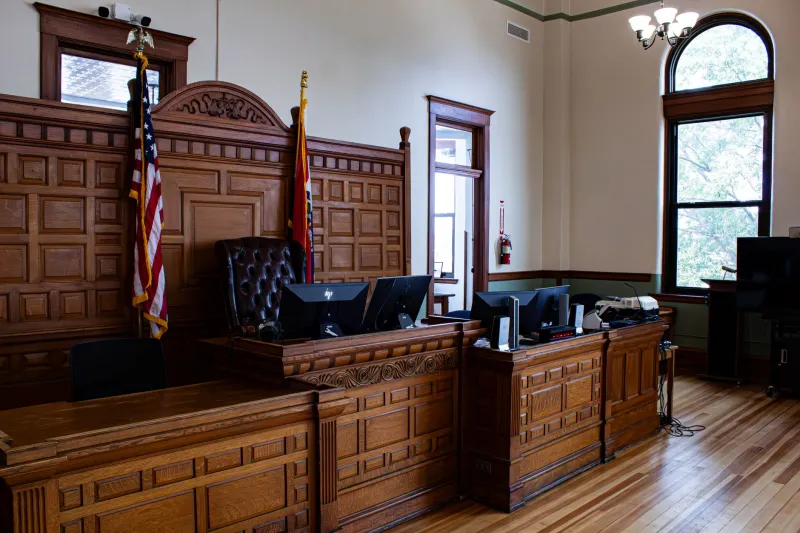
Nobody Checked Whether Anyone Was Still Alive
Here's a sentence you'd expect to find in a Kafka novel, not a real courthouse: a civil lawsuit was actively litigated in a Pennsylvania county court for 37 years after every single person who originally filed it had died.
 Photo: Kafka, via c8.alamy.com
Not paused. Not archived. Not quietly shelved in a dusty back room. Actively litigated. Motions were filed. Continuances were granted. Procedural responses were submitted. And through all of it, not one person in that courthouse flagged the fact that the humans at the center of the dispute had long since left the building — permanently.
It sounds like something a law professor invents to torture first-year students. But this actually happened. And the way it finally ended is almost as surreal as the fact that it ran so long in the first place.
How a Land Dispute Became Immortal
The case began simply enough — a property boundary disagreement between two neighboring landowners in a rural Pennsylvania county sometime in the mid-20th century. These kinds of disputes are as old as fences themselves. One party believed a surveyor's line had been drawn incorrectly. The other disagreed. Lawyers got involved. Paperwork was filed. The machinery of civil litigation clicked into motion.
What nobody anticipated was just how slowly that machinery would grind.
Early delays were unremarkable. Court calendars backed up. Attorneys requested extensions. One side changed legal representation. Documents needed to be located, verified, and re-examined. None of this was unusual. Property disputes, particularly those involving historical deed records, can take years to resolve under completely normal circumstances.
Then the original plaintiff died. Then the defendant. Then one of the primary attorneys. Then the other.
And the case kept going.
Procedural Quicksand
How does a lawsuit survive the deaths of everyone who started it? The answer, it turns out, lies in a series of procedural mechanisms that were each designed with completely reasonable intentions — and which, in combination, created a kind of legal perpetual motion machine.
When a party to a lawsuit dies, their legal interests typically pass to their estate, and from there to their heirs. Attorneys of record are obligated to notify the court, but if those attorneys also die or retire without properly transferring their obligations, notification can fall through the cracks. Courts, particularly in smaller counties with limited administrative staffing, generally rely on parties to flag changes in status rather than proactively auditing case files.
In this instance, the case appears to have been inherited by family members who may not have fully understood what they'd taken on — or who assumed someone else in the chain was managing it. Continuances kept being granted, in part because every time a deadline loomed, some piece of paperwork arrived that technically satisfied the procedural requirement to keep the case open.
The courthouse clerk who handled the file for much of this period later said, in accounts referenced by legal observers, that the case simply never rose to the level of irregularity that would trigger a review. It was slow, yes. But slow wasn't unusual. Without a specific reason to pull the file and audit it from the beginning, the case just... kept existing.
The Accidental Discovery
The anomaly finally surfaced not because of any internal court review, but because a newly hired county administrator was tasked with digitizing old case records as part of a courthouse modernization effort. Working through a backlog of open civil files, she pulled the property dispute, began entering data — and realized that the names attached to the case matched obituaries she could find in county death records going back decades.
Further research confirmed the situation. The original litigants had both been dead for nearly 40 years. Their primary attorneys had died within a decade of the case's filing. What had kept the case technically alive was a combination of inherited estate obligations, a handful of distant heirs who had sporadically responded to procedural notices without understanding the full history, and a filing system that had no automatic mechanism for auditing the biological status of active parties.
Legal scholars who later examined the case noted that it wasn't technically illegal for the suit to have continued — messy, procedurally irregular, and arguably a waste of court resources, but not illegal. The system had been followed, in its own strange way. It had simply never been designed to ask: is anyone still alive here?
What It Exposed
The case was ultimately closed through a consent agreement negotiated between the surviving descendants of both original parties — none of whom had any particular emotional investment in a property line dispute that predated their own memories. The land in question had changed hands multiple times through ordinary transactions in the intervening decades, making the original boundary argument largely moot.
But the legal community's interest in the case didn't end there. It became a reference point in discussions about procedural reform, particularly around mandatory case audits for long-dormant civil matters and clearer protocols for attorney succession when counsel dies or retires mid-litigation.
Several state bar associations cited the case when pushing for updated rules requiring courts to periodically verify that parties in open civil matters are still living — or that their estates are being actively represented by someone who actually knows the case exists.
It also became, somewhat inevitably, a favorite story among law professors teaching civil procedure. Because nothing illustrates the gap between how a legal system is designed to work and how it actually works quite like a lawsuit that spent nearly four decades in court after everyone who cared about it was already gone.
The Courthouse That Kept the Clock Running
There's something almost poetic about a property dispute outliving the people who started it. Land, after all, tends to outlast us. The idea that a legal argument about where one person's ground ends and another's begins could persist, zombie-like, through decades of human mortality is strange — but it's also a very human story about systems that keep running long after the original purpose has dissolved.
The courthouse still stands. The property in question still exists. And somewhere in a newly digitized county archive, the case file sits — closed at last, but a permanent reminder that in American law, the paperwork sometimes has a longer lifespan than the people it was written for.