Sealed, Forgotten, and Never Freed: The Tennessee Town That Lived Under a Phantom Quarantine for Nearly Four Decades
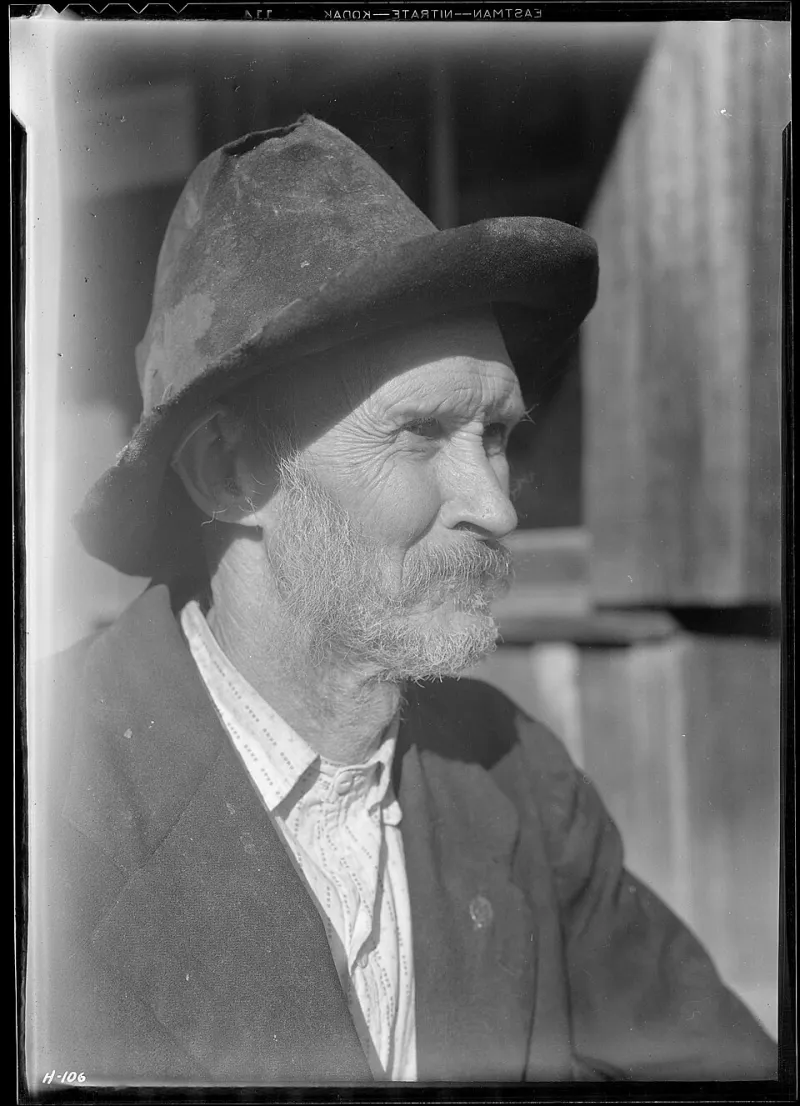
Photo: Lewis Hine, Public domain, via Wikimedia Commons
Imagine being told you can't leave your town. That outsiders won't do business with you. That your neighbors in the next county cross the street when they see you coming — not out of rudeness, but out of genuine fear. Now imagine that the reason for all of it is a clerical error buried in a filing cabinet at the county health office, and that the people responsible for fixing it simply... never did.
For the residents of a small farming community in rural Tennessee, that wasn't a hypothetical. It was Tuesday.
The Diagnosis That Started Everything
In the early years of the twentieth century, American public health infrastructure was, to put it charitably, a work in progress. Germ theory was still relatively new. State health boards were underfunded, understaffed, and often operating with physicians whose training varied wildly in quality and recency. In this environment, a single doctor's report could carry enormous institutional weight — especially when it named a disease that frightened people.
Around 1905, a traveling state health examiner visited the community following reports of several residents presenting with skin lesions, fever, and respiratory symptoms. His written report to the Tennessee State Board of Health named a specific, highly contagious disease — one that, at the time, carried serious legal quarantine obligations under state law.
 Photo: Tennessee State Board of Health, via www.wjhl.com
The board acted quickly, as boards tend to do when the word "contagious" appears in official correspondence. A quarantine order was issued. The community was effectively sealed.
What the board did not do — what no one did — was verify the diagnosis.
A Second Opinion That Arrived Too Late
Within months of the quarantine order being issued, at least one local physician raised concerns. The symptoms he was observing didn't match the disease named in the state report. The progression was wrong. The transmission pattern was wrong. He submitted his own written assessment suggesting the original examiner had confused the condition with a far less dangerous and entirely non-contagious illness with overlapping early symptoms.
His report was filed. It was acknowledged. And then, apparently, it was placed in a drawer and left to develop its own ecosystem.
The quarantine remained in effect.
Life Inside the Red Tape
What followed was nearly four decades of bureaucratic limbo that reshaped the community in ways both practical and deeply personal.
Commerce dried up almost immediately. Merchants from neighboring towns refused delivery contracts. Agricultural buyers stopped accepting produce from the area, citing liability concerns — a vague but effective excuse that didn't require anyone to engage directly with the legal question of whether the quarantine was valid. Residents who attempted to travel for work or family visits reported being turned away from lodging, refused service at businesses, and in some cases questioned by local law enforcement in neighboring counties acting on standing health board notifications.
Socially, the stigma was corrosive. Families with roots in the community found it increasingly difficult to arrange marriages with families from outside the quarantine zone. Young people who left for work in larger cities sometimes concealed where they were from. The community developed what sociologists studying the period have described as a particular kind of collective shame — not guilt over anything done wrong, but the internalized humiliation of being publicly marked as dangerous when you know, and your neighbors know, that you are not.
All of it resting on a misread medical report that a second doctor had disputed before the ink was dry.
The Clerk Who Accidentally Saved a Town
The quarantine's end came not through advocacy, litigation, or a crusading journalist — though all of those would have been reasonable vectors. It came through a county clerk performing a routine administrative audit in the early 1940s.
The clerk, working through decades of accumulated health board files as part of a broader records consolidation effort, pulled the original quarantine documentation and noticed something odd: the file contained two medical assessments reaching opposite conclusions, and the quarantine order cited only the first. Standard procedure at the time required that conflicting medical reports be reviewed by a board panel before a quarantine order could be considered legally binding.
That review had never happened.
The clerk escalated the finding. A state health board review followed — the first substantive official examination of the original order in nearly four decades. Within months, the board formally vacated the quarantine, acknowledging in its published minutes that the original diagnosis had been, in their careful bureaucratic phrasing, "insufficiently supported by the available clinical evidence."
Translation: the disease was never there.
What Bureaucratic Inertia Actually Costs
It would be easy to read this story as a relic — a product of a less sophisticated era when record-keeping was sloppy and medical science was still finding its footing. But the mechanisms that kept this quarantine alive for 38 years aren't really about the 1900s.
They're about what happens when institutions issue orders that are painful to reverse. When admitting an error carries more institutional cost than allowing the error to persist. When the people most harmed by a mistake are also the people with the least power to compel anyone to fix it.
The Tennessee community eventually recovered — economically, if not entirely socially. The stigma took longer to fade than the legal restrictions did. Some families who had left during the quarantine years never came back.
And somewhere in a Tennessee archive, there's a county health board file with two medical reports in it — one wrong, one right — sitting side by side for nearly forty years before anyone bothered to read them both.