One Missing Pig, Two Armies, and the Border Standoff That Almost Broke North America
Most diplomatic crises have grand causes. Territory. Trade. Political assassinations. The kind of thing that fills chapters in history books and gets named after the leaders who navigated them.
And then there's the Pig War.
In 1859, the United States and the British Empire came genuinely, uncomfortably close to armed conflict over a single pig — a pig that had been shot by a Kentucky farmer on a small island most Americans today couldn't find on a map. The standoff that followed involved warships, infantry deployments, a general who later fought at Gettysburg, and a crisis that eventually had to be settled by the German Kaiser acting as an international referee.
You could not make this up.
The Island Nobody Could Agree On
To understand why a pig mattered so much, you have to understand where this happened.
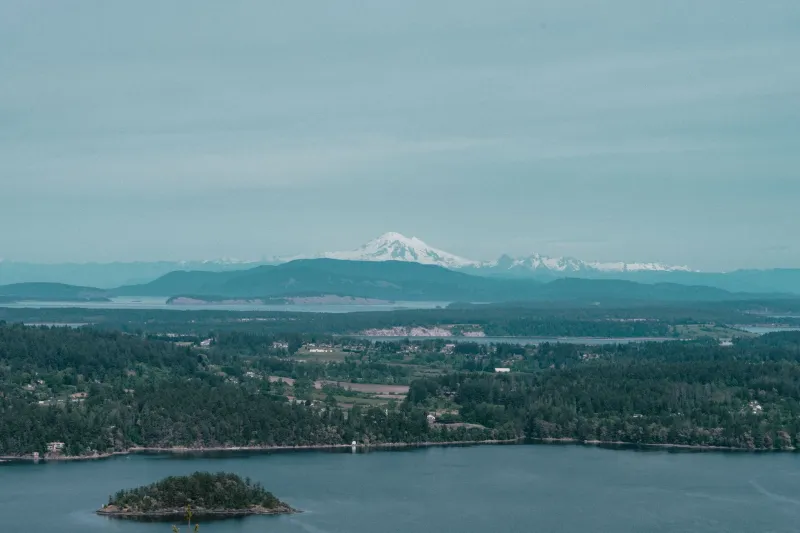
San Juan Island sits in the waters between what is now Washington State and Vancouver Island in Canada. In 1859, it occupied a deeply awkward legal position: both the United States and Britain claimed it. The Oregon Treaty of 1846 had established the 49th parallel as the border between the two nations, but the treaty's language about the island-studded waterways in the Pacific Northwest was — to put it charitably — vague. Both governments interpreted the boundary differently, and San Juan Island fell squarely in the disputed middle ground.
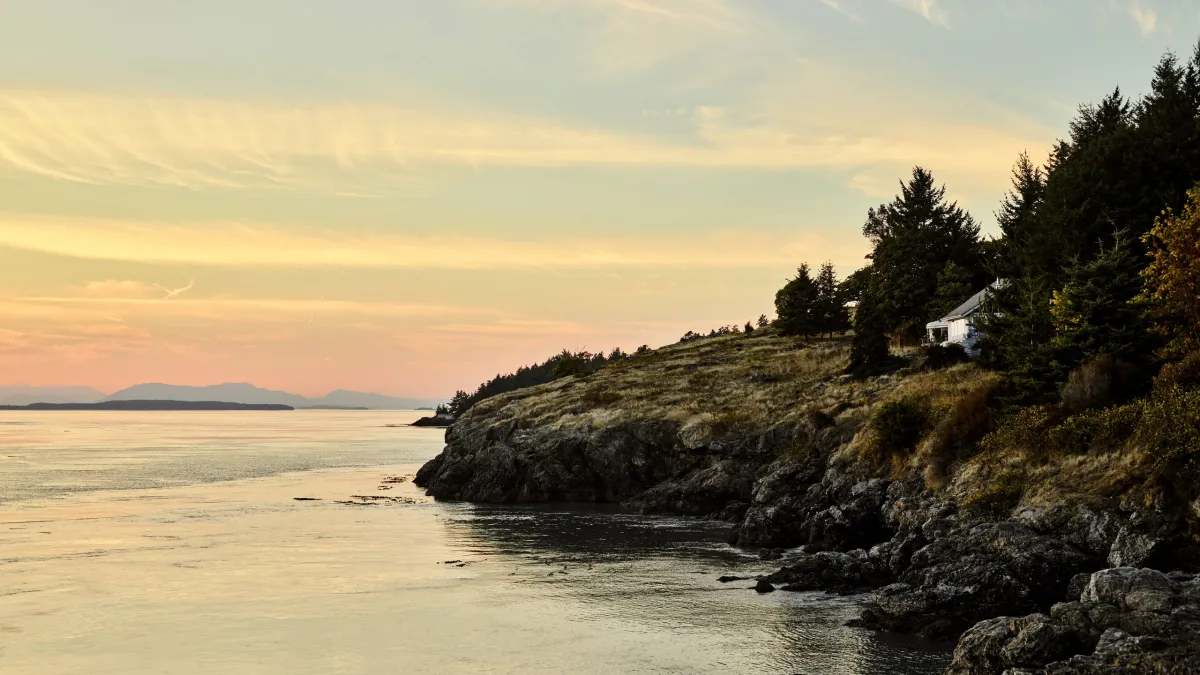 Photo: San Juan Island, via media.cntraveler.com
As a result, the island had both American settlers and employees of the British Hudson's Bay Company living on it simultaneously, each group operating under the assumption that their nation's law applied. It was an arrangement held together entirely by mutual restraint and the shared understanding that nobody wanted to be the one to actually test it.
Then Lyman Cutlar found a pig eating his potatoes.
The Shot Heard Across the Strait
Cutlar was an American farmer who had settled on San Juan Island and, by American reckoning, had every right to be there. The pig in his garden belonged to the Hudson's Bay Company. It had apparently wandered onto his property before — this was not, by some accounts, the first time — and on the morning of June 15, 1859, Cutlar had finally had enough. He shot it.
The pig died. The British were not pleased.
When Hudson's Bay Company representatives came to Cutlar demanding compensation — somewhere in the range of $100, a significant sum at the time — Cutlar refused, reportedly arguing that the pig had been trespassing. The British countered that Cutlar was the trespasser, since the island was British territory. Cutlar appealed to American military authorities. The American military sent a captain named George Pickett — yes, that George Pickett — with a company of soldiers to protect American settlers.
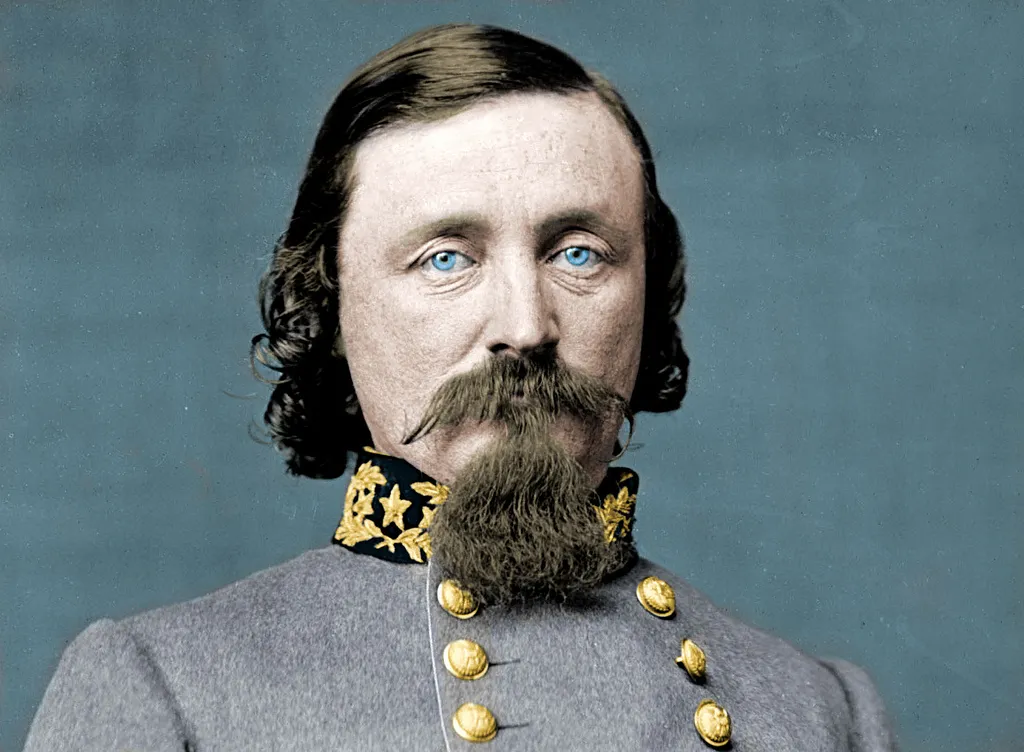 Photo: George Pickett, via civilwargeneralsab.weebly.com
Britain responded by sending warships.
Warships Over a Hog
At the height of the standoff, the situation was genuinely alarming. British Rear Admiral Robert Baynes arrived with a fleet carrying somewhere between 2,000 and 2,500 troops. On the American side, Pickett's force was eventually reinforced to several hundred soldiers, dug in and prepared to hold their position.
For a brief, surreal stretch of the summer of 1859, two of the world's most powerful nations had military forces in direct proximity on a small Pacific island, ostensibly prepared to go to war over a jurisdictional dispute that had been triggered by a dead pig.
To his enormous credit, Admiral Baynes refused to escalate. He reportedly described the idea of "two great nations going to war over a squabble about a pig" as absurd — which it was — and declined to order an assault on the American position. His restraint almost certainly prevented a catastrophe.
Both governments, once they got word of what was happening, moved quickly to cool things down. The solution they arrived at was elegant in its simplicity: joint military occupation. Both nations would station a small contingent of troops on the island simultaneously, under an agreement of mutual non-aggression, while diplomats figured out the actual boundary question.
The World's Most Cordial Military Occupation
What followed was one of the stranger arrangements in military history. For the next twelve years, American and British soldiers lived on opposite ends of San Juan Island under a formal joint occupation agreement. By most historical accounts, they got along remarkably well. They celebrated each other's holidays, shared supplies on occasion, and reportedly held joint social events. The two camps were, by the standards of international standoffs, almost neighborly.
The actual boundary question was finally resolved in 1872, when Kaiser Wilhelm I of Germany was asked to arbitrate. He ruled in favor of the United States. The British withdrew. San Juan Island became, officially and permanently, American territory.
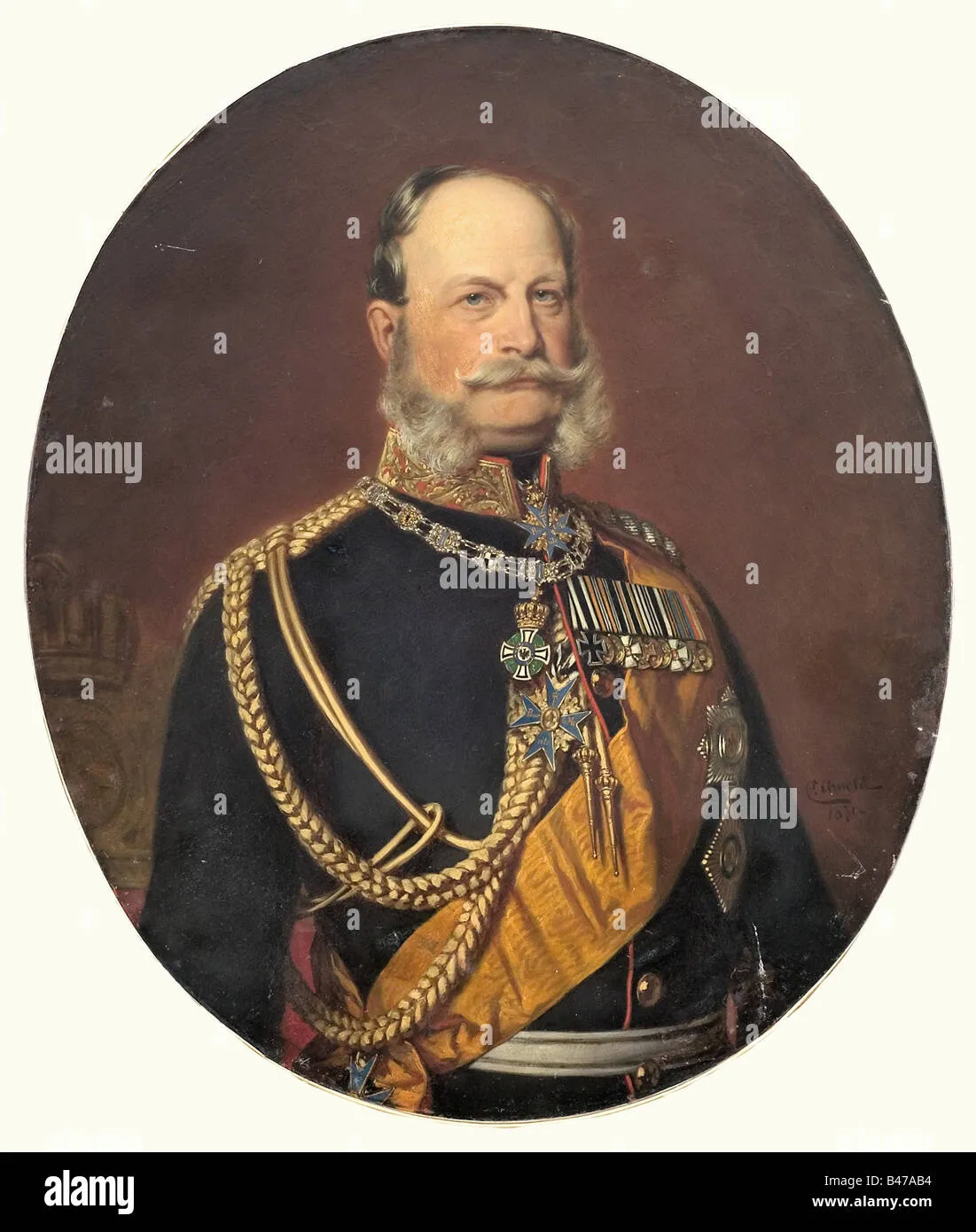 Photo: Kaiser Wilhelm I, via c8.alamy.com
Lyman Cutlar, the farmer whose garden started all of this, is not recorded as having made any particular comment on the outcome.
The Pig War's Unlikely Legacy
The Pig War — and yes, that is its actual historical name — is remembered today partly because it's funny and partly because it isn't. The funny part is obvious: warships over a pig. The less funny part is how easily it could have gone differently.
Had Admiral Baynes been a more aggressive commander, or had either government been less willing to de-escalate, a shooting war between the United States and Britain in 1859 would have had consequences that are difficult to fully imagine. The Civil War was two years away. Anglo-American relations during that conflict were already complicated. A prior military engagement could have reshaped the entire history of North America.
Instead, cooler heads prevailed, a German emperor drew a line on a map, and the whole episode settled into the category of historical footnote — the kind that makes you simultaneously relieved and slightly amazed that civilization survived it.
The pig, for its part, remains the only casualty of the entire conflict.