The Day Washington Decided Ketchup Was a Vegetable — and American Lunch Was Never the Same
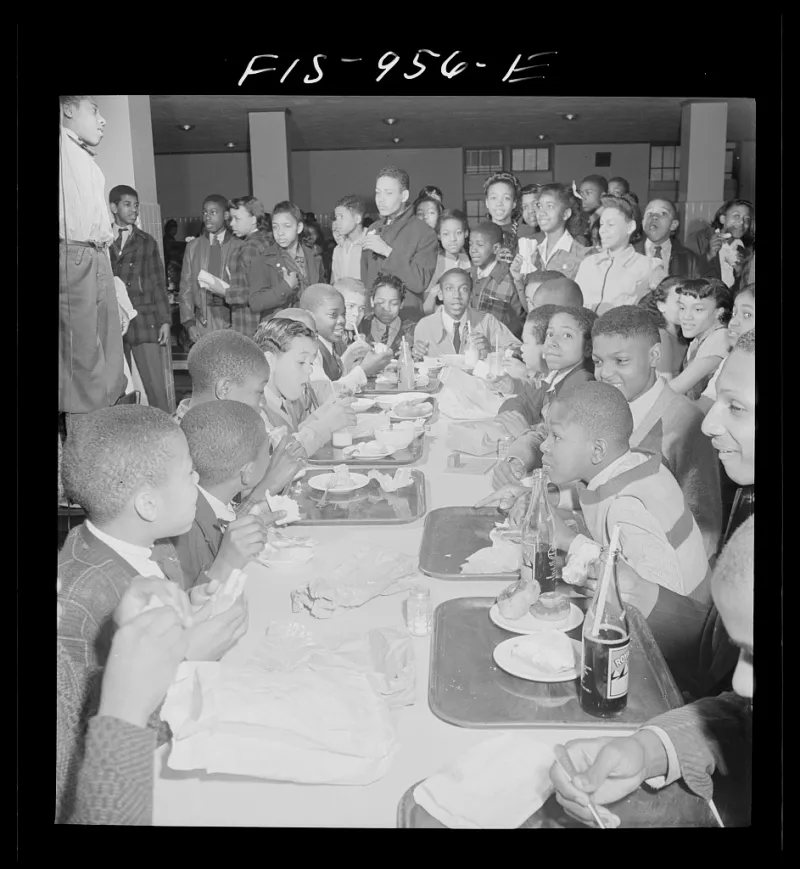
Photo: Marjory Collins, Public domain, via Wikimedia Commons
Political scandals come in many flavors. Some involve money. Some involve power. And then there are the ones that involve condiments — the rare, glorious category of Washington disaster where the central controversy is whether a squeeze bottle of tomato paste counts as a nutritional serving of vegetables for a seven-year-old.
1981 gave us one of those.
The Reagan administration's budget office, tasked with finding ways to trim federal spending across every conceivable department, eventually turned its attention to the National School Lunch Program — a federally subsidized initiative that had been feeding American schoolchildren since 1946. The program had rules about what a qualifying school lunch had to include: protein, grains, milk, and a certain quantity of fruits and vegetables. Those requirements cost money. And so, in the spirit of fiscal efficiency, someone in the bowels of the Office of Management and Budget wrote a memo proposing that the vegetable requirement could be satisfied, at least in part, by ketchup.
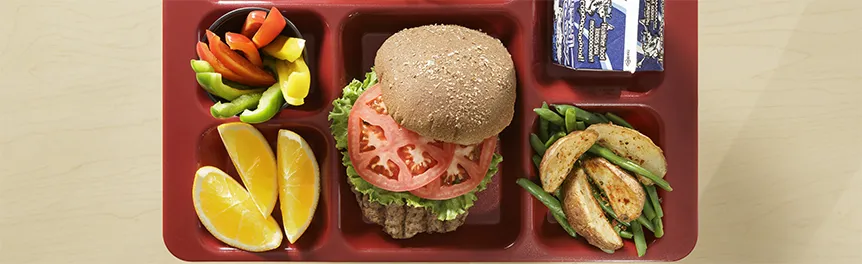 Photo: National School Lunch Program, via cc-fdacs-storage.s3.amazonaws.com
Pickle relish was also floated as a candidate.
The memo was not meant to be funny. It was deadly serious. And that, more than anything else, is what made it so spectacularly, historically absurd.
The Bureaucratic Logic That Made Perfect Nonsense
To be fair — and fairness is perhaps more than this memo deserves — there was a technical argument lurking beneath the proposal. Ketchup is made from tomatoes. Tomatoes are, botanically speaking, a fruit, though the federal government had famously classified them as a vegetable for tariff purposes back in 1893. Ketchup contains some of the nutritional components of tomatoes. Therefore, the reasoning went, ketchup could plausibly function as a vegetable serving in the context of school nutrition standards.
The flaw in this logic is approximately the size of a school cafeteria. Ketchup, by the time it reaches the little paper cup next to a child's tater tots, contains a substantial amount of added sugar, salt, and vinegar. The tomato content that remains bears only a passing nutritional resemblance to an actual vegetable serving. The proposal was, in nutritional terms, roughly equivalent to counting grape juice as a serving of grapes.
But the budget office was not staffed by nutritionists. It was staffed by people trying to find ways to spend less money. And in that very narrow context, the memo made a certain kind of sense.
The Reaction Was Immediate and Merciless
The proposal leaked — as Washington proposals invariably do — and the response was swift, loud, and thoroughly bipartisan in its mockery.
Newspaper editorial boards across the country lit up. The Washington Post ran pieces that ranged from incredulous to scathing. Late-night television, still in the era of Johnny Carson, found the story irresistible. Carson's monologue treatment of the ketchup-as-vegetable proposal became one of the more memorable bits of early-80s political comedy, landing with audiences who found the image of a bureaucrat earnestly defending Heinz as a health food genuinely hilarious.
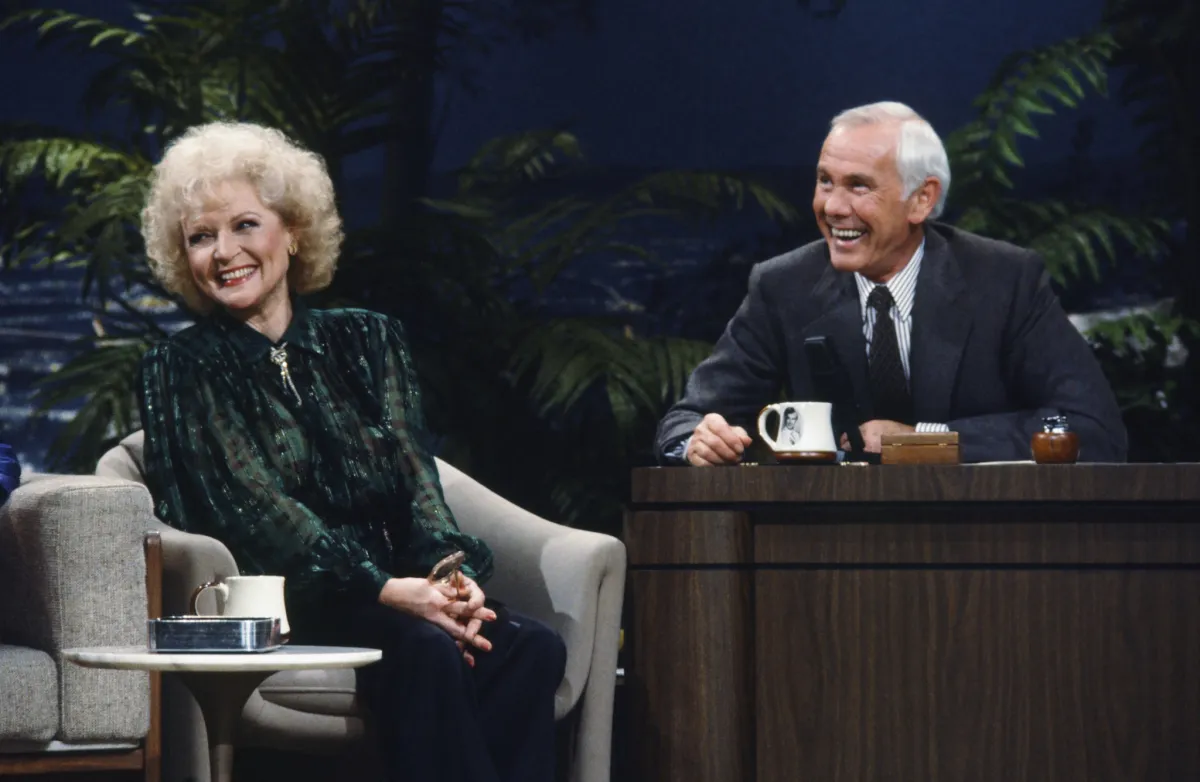 Photo: Johnny Carson, via m.media-amazon.com
 Photo: Washington Post, via cdn.britannica.com
Congress, which is not always quick to act but can move with remarkable speed when the subject matter is sufficiently embarrassing, pushed back hard. Democrats framed the proposal as evidence of an administration that was willing to balance its budget on the backs of schoolchildren. Republicans, many of whom represented districts where school lunch was a genuine lifeline for low-income families, were not enthusiastic about defending ketchup as a vegetable to their constituents.
The administration withdrew the proposal within weeks. It had never actually been implemented — it was a budget suggestion, not a rule — but the withdrawal came with the kind of quiet, undignified speed that signals genuine institutional embarrassment.
The Joke That Kept Legislating
Here is where the story gets genuinely interesting, because the ketchup-as-vegetable episode didn't end when the proposal was pulled. It kept going, in ways that shaped American food policy for decades.
The public uproar generated by the memo drew sustained attention to the National School Lunch Program in a way that hadn't happened before. Advocacy groups that had been quietly pushing for stronger nutrition standards in school cafeterias suddenly had a national audience and a perfect villain: the image of a government bureaucrat trying to classify a condiment as a health food.
Congressional hearings on school nutrition standards followed. Nutrition researchers testified. School lunch program administrators explained, in granular detail, how the program's requirements worked and what happened when schools found ways to technically comply while nutritionally cutting corners. The ketchup episode had made abstract policy questions viscerally tangible to ordinary Americans in a way that years of advocacy had failed to accomplish.
The resulting legislative and regulatory attention led to strengthened nutritional guidelines for the school lunch program over the following years — guidelines that were more specific, harder to game, and more focused on actual nutritional content rather than category checkboxes. The irony is profound: an attempt to weaken nutrition standards generated a backlash that ultimately produced stronger ones.
The Long Shadow of a Condiment
The ketchup debate also planted a seed that kept growing in American food politics. Questions about what counts as a vegetable — and who gets to decide — became recurring themes in subsequent decades of school nutrition policy. When the Obama administration's USDA proposed stricter school lunch standards in 2011, opponents in Congress pushed back by attempting to classify pizza sauce as a vegetable serving, a move that drew immediate comparisons to the ketchup episode and generated its own round of national mockery.
The cycle had repeated itself, thirty years later, with nearly identical contours: budget pressure, creative classification, public outrage, late-night comedy, eventual retreat.
What the 1981 ketchup memo revealed — and what its echoes keep revealing — is something fundamental about the tension between cost management and genuine nutrition in publicly funded food programs. The children eating school lunches don't have lobbyists. They don't write op-eds. They don't call their representatives. And so the people making decisions about what goes on their trays are, periodically, tempted to optimize for budget lines rather than nutrition labels.
The ketchup episode matters not because ketchup is particularly important, but because the fight over it forced a public reckoning with questions that had been quietly decided in budget offices for years.
A memo that was supposed to save a few dollars per lunch tray instead cost the administration significant political capital, accelerated nutrition advocacy by a decade, and gave Johnny Carson some of his best material of the early 1980s.
Not bad for a condiment.